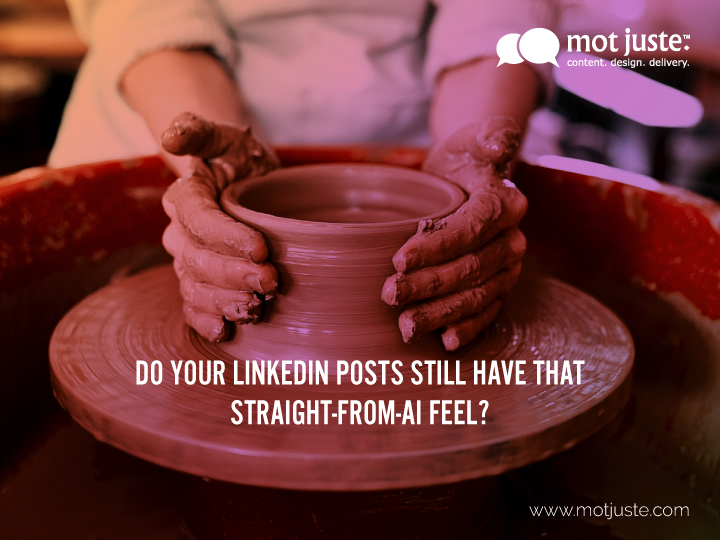
There is a particular kind of LinkedIn post you can spot almost immediately.
They follow a familiar structure. Share a generic observation. Have a predictable opening. Artworks that scream AI. Overall, there’s very little that moves, educates, entertains, or challenges the reader.
This is no longer anecdotal. Over 40% of long-form posts with more than 250 words on LinkedIn have become fully AI-generated, and it is ruining the user experience.
This is why LinkedIn has recently added a ‘Seems like AI slop’ button, allowing users to flag content that they consider to ‘slop’.
LinkedIn’s ‘AI Slop’ button and its impact on algorithm and UX
When a user marks a post as AI slop, it is hidden from their feed. The feedback can help LinkedIn improve how it identifies and reduces low-quality and AI-generated content.
This button can affect the reach of the post negatively and the user experience positively, as the content is less likely to be widely distributed.
“People come to LinkedIn to connect with real people and share their real perspectives, ideas, and expertise,” said LinkedIn’s Chief Product Officer, Hari Srinivasan. That’s why LinkedIn is giving members a way to flag content that feels off, using that feedback to tune its models and make better, ‘real’-er feeds.
What makes content AI slop?
AI-generated does not automatically mean AI slop, just as human-written does not automatically mean good content.
The problem arises when content becomes flat, generic, and disconnected from the business’s voice, expertise, or point of view. It may be technically well-written, but still fails to build trust, demonstrate expertise, or give the audience a reason to engage.
When used within a human-led process, AI can support research, brainstorming, drafting, and editing. The real strategy, subject-matter expertise, judgement, and refinement are what make the final communication relevant and publish-ready.
For B2B businesses, where communication plays an important role in establishing expertise and credibility, keeping a human in the loop is essential.
Why volume cannot replace relevance
AI has made it easier for businesses to produce content at scale, increasing the number of opportunities to appear in a feed.
But effective communication starts with a different set of questions:
What do you know that your audience needs to know?
What questions are your customers asking?
What experience can you draw on?
What perspective can you offer that is relevant to your market?
These inputs provide the substance your communication can be built on.
AI can support different stages of communication, but it cannot replace the thinking that should go into the content. Intentional, on-brand communication strategy matters more than volume, across every communication channel.
Intentional, on-brand communication
Using AI does not automatically make communication less effective. The key distinction is whether human judgement remains involved throughout the process, especially in strategy, business understanding, audience insight, and final editorial judgement.
The businesses that stand out will not be those that publish the most. They will be the ones with something relevant to say.
Why creating content internally is tough
Most B2B businesses already have the knowledge and expertise needed for good content. However, other business priorities take up your experts’ bandwidth, making it tough to prepare the content yourselves.
In addition, creating content that is specific, relevant, and aligned with the brand requires more than having ideas. Someone still needs to turn them into a content strategy, develop the angle, verify the research, write the post, design the visual, and refine the final version.
Without clear positioning, content pillars, voice guidance, and editorial standards, even valuable ideas can become generic or ‘slop’ in execution.
This is where experience comes in. A partner with both business and marketing expertise can help translate subject-matter knowledge into communication that is relevant to the audience, aligned with the brand, and appropriate to the channel.
You need to communicate your message comprehensively, without turning off your readers. That’s where a partner like Mot Juste can help.
Stand out with Mot Juste
At Mot Juste, we leverage our business and marketing experience to help B2B businesses communicate clearly and consistently.
Our team remains involved throughout the process, from planning and research to content creation, design, and refinement, to ensure that your content doesn’t look AI-generated.
If you are looking to create more intentional, on-brand communication for your business, we’re just a conversation away.